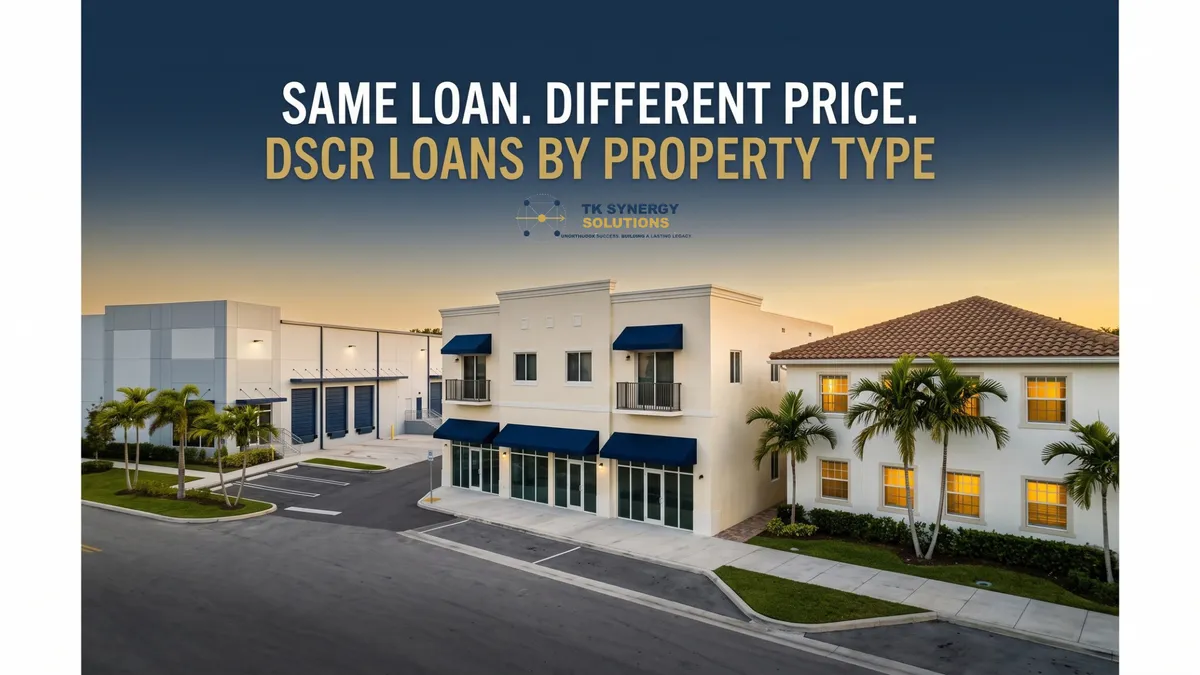
DSCR Loan Rates by Property Type in 2026: Why Warehouses, Mixed-Use, and Rentals Price Differently
Picture two investors with the same credit score, the same down payment, and the same determination. One is buying a duplex in Lauderhill. The other is buying a small warehouse in Pompano Beach. Both apply for a DSCR loan in the same week, and they walk away with very different pricing.
Nothing is wrong with either file. What's different is the property. In 2026, with borrowing costs rising after the Federal Reserve's September rate hike, understanding why lenders price property types differently can save you money and keep your deal alive.
Here's how it works, in plain English.
First, a Quick DSCR Refresher
A DSCR (Debt Service Coverage Ratio) loan qualifies you based on what the property earns, not your personal income. The core math is simple: rental income ÷ the property's debt payment. If you're new to DSCR, start with our guide on how DSCR loans save falling deals.
But the ratio is only part of the story. Lenders also ask: What kind of property is producing that income, and how reliable is it?
Why Property Type Changes the Price
Every loan price is really a price on risk. When a lender looks at a property, they're quietly asking three questions:
How predictable is the income? Steady rent from many tenants feels safer than income that swings month to month.
How hard is it to replace a tenant? An empty apartment usually fills faster than an empty specialty storefront.
How easy is it to sell if something goes wrong? Properties with a deep pool of buyers are easier for a lender to recover from.
The answers look different for every property type, and that's why the pricing does too.
Long-Term Rentals (1–4 Units)
Single-family homes, duplexes, triplexes, and fourplexes are the most standardized corner of the DSCR world. Lenders see a huge volume of them, rent data is easy to verify, and there's almost always a buyer if the property needs to be sold. That familiarity often translates into some of the most competitive DSCR pricing available.
Two twists to know:
Short-term rentals (like vacation rentals) can earn more, but their income is seasonal and less predictable, so they're often priced higher than long-term leases.
Condos may get extra review of the building itself, including HOA finances and the building's overall condition.
Small Multifamily (5+ Units)
Once a building passes four units, it typically moves into commercial underwriting. The good news: many lenders view apartment buildings favorably because the income is spread across many tenants. One vacancy won't sink the ship. Expect more paperwork, like rent rolls and operating statements, but a well-run building can command strong terms.
Warehouses and Industrial Properties
Industrial space has been in demand, fueled by e-commerce and logistics. Many warehouses use triple-net (NNN) leases, where the tenant pays taxes, insurance, and maintenance. That keeps the owner's expenses predictable, and lenders like predictable.
The catch is tenant concentration. Many warehouses have a single tenant. If that tenant leaves, occupancy goes from 100% to zero overnight. That's why lenders study the tenant's financial strength and the time remaining on the lease so closely. A strong tenant on a long lease can make a warehouse very attractive. A short lease with an unknown tenant can push pricing up.
Mixed-Use Buildings
Mixed-use properties, like apartments over storefronts, combine residential and commercial income. That blend can be a strength: steady apartment rent can help offset retail turnover. But it also makes underwriting more complex. Lenders may look closely at how much of the income comes from the commercial side, how long the retail leases run, and how easily those spaces would re-lease.
Mixed-use often lands in the middle of the pricing spectrum, and a strong residential component can pull it in your favor.
At a Glance: How Lenders See Each Property Type
Property Type | What Lenders Like | What Makes Them Cautious |
|---|---|---|
1–4 Unit Rentals | Easy-to-verify rents, large buyer pool | Short-term rental income swings |
5+ Unit Multifamily | Income spread across many tenants | Weak rent rolls, deferred maintenance |
Warehouse / Industrial | NNN leases, strong tenant demand | Single-tenant risk, short leases |
Mixed-Use | Diversified income streams | Retail vacancy, complex underwriting |
What You Can Control, No Matter the Property
You can't change a building's category, but you can strengthen your file:
Build a stronger ratio. The more the income exceeds the payment, the safer you look.
Bring more equity. A larger down payment lowers the lender's risk.
Protect your credit. It still matters, even when your income doesn't.
Hold solid reserves. Cash on hand shows you can weather a vacancy.
Organize your documents. Clean leases, rent rolls, and expense records speed everything up.
Ask about prepayment options. How long you plan to hold can affect how a loan is structured.
The Unorthodox View: Price Is a Signal, Not a Stop Sign
When a warehouse or mixed-use building prices higher than a rental, it doesn't mean "don't buy it." It means the lender sees risk you need to understand and plan around. Smart investors use that signal to negotiate better, structure smarter, and choose deals that fit their long-term plan.
That's Unorthodox Success: seeing past the headline number to the strategy underneath. It's how portfolios grow into a lasting legacy.
Find the Right Fit for Your Property
Through our Legacy Capital pillar, TK Synergy Solutions connects investors with trusted lending partners for DSCR loans, commercial real estate financing, and business lines of credit, across rentals, mixed-use, and industrial properties. We're not a lender. We're your connector and guide.
Weighing a rental, a warehouse, or a mixed-use deal? Get Qualified for Legacy Capital and see which financing path fits your property.
This article is for educational purposes only and does not quote rates or terms. Actual pricing varies by lender, market, property, and borrower profile. TK Synergy Solutions is a consulting and connector firm, not a direct lender. We may receive compensation from our lending partners when you apply through our links. All financing is subject to lending partner review and approval.